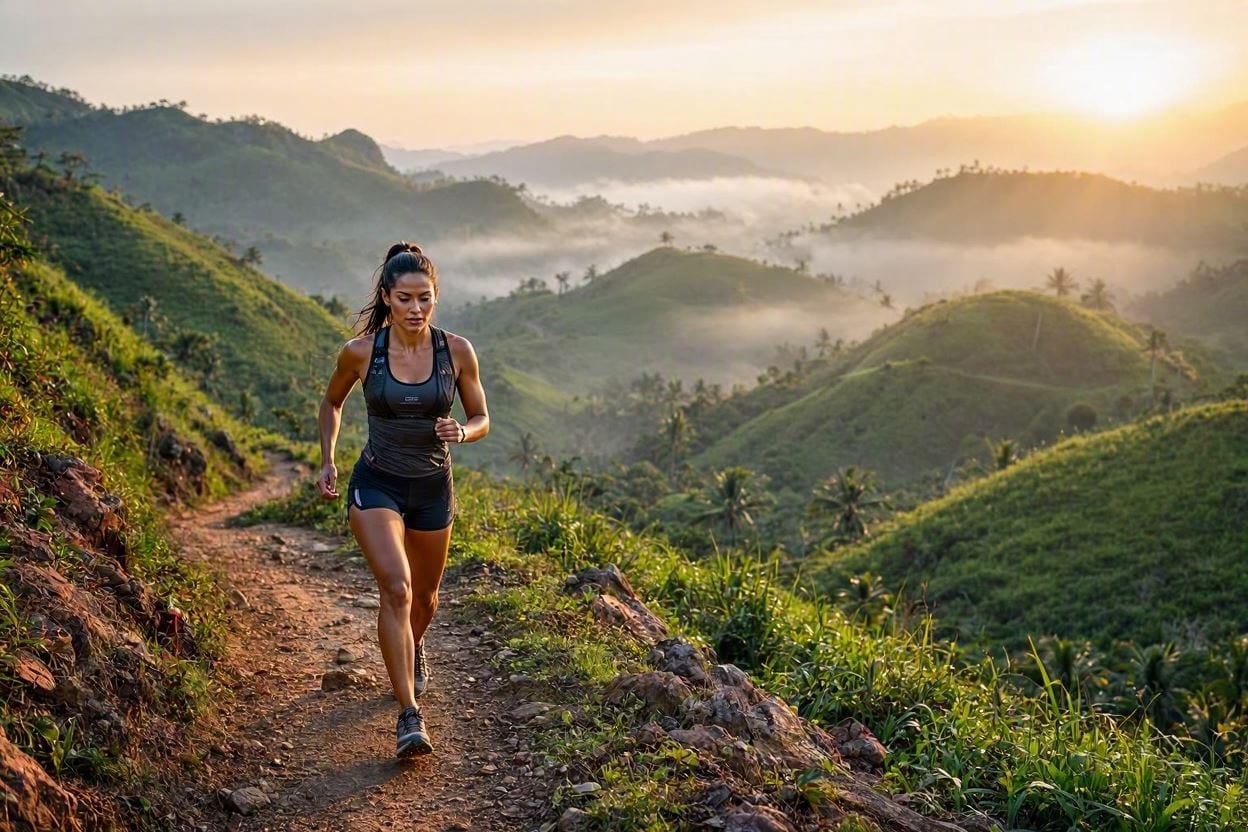
Most Filipino runners start on roads — the seawall, the subdivision loop, the SRP. Then one weekend somebody invites you up to Busay, you spend two hours climbing something that would have taken 40 minutes on flat ground, and you come back muddy, wrecked, and completely hooked.
Cebu is quietly one of the better places in the Philippines to run trails. Real elevation sits 20 minutes from the city, and the terrain goes from gentle dirt road to genuine mountain running within a single ride. Here's what to know before your first one.
Why Run Trails Instead of Roads?
Trails ask different things of your body. Uneven ground recruits stabilizing muscles that road running never touches, softer surfaces cut the repetitive impact your joints absorb, and constant climbing builds strength that shows up later in your road times. Pair it with two short strength sessions a week and your ankles and knees will thank you on the descents.
There's also the part nobody quantifies: you stop caring about pace. On a trail, a slow kilometer means the climb was steep, not that you're unfit. That mental reset alone is worth the trip for a lot of runners.
Where Can You Go Trail Running in Cebu?
A few areas cover almost everything a beginner needs.
- Busay and Sirao — the classic starting point. Steady climbing above the city on a mix of paved sections and dirt, with plenty of places to turn around when you've had enough.
- Napo to Mount Babag — reached from Guadalupe, this is the local proving ground. Steep, technical in places, and a proper mountain effort. Go with someone who knows it first.
- Kan-Irag area — rolling terrain in the hills behind the city, popular with local trail groups for longer weekend sessions.
- Osmeña Peak, Dalaguete — two to three hours south, and worth the drive. Open ridgeline, cooler air, and the best views you'll run all year. Treat it as a day trip rather than a morning run.
If you'd rather ease in, some of the softer options in our guide to the best places to run in Cebu make a good bridge between road and trail.
10 Trail Running Tips for Beginners
1. Forget your pace completely
Your trail pace will be two to four minutes per kilometer slower than your road pace, sometimes worse on the climbs. This is not a fitness problem. A 10K on Cebu trails can take as long as a road half marathon — measure the run in time and effort, not in splits.
2. Walk the steep climbs
Experienced trail runners walk. Power-hiking a steep pitch is often faster than a shuffling jog and costs far less energy. On long climbs, hands on your thighs and a strong steady march is proper technique, not surrender.
3. Take short, quick steps
Long strides on uneven ground are how ankles roll. Shorten your stride, raise your cadence, and keep your feet landing under your body. The same applies going down — small fast steps beat big committed leaps every time.
4. Look ahead, not down
Scan about three to four meters in front of you rather than at your shoes. Your feet handle the ground your eyes already read a second ago. Staring straight down means you react to obstacles far too late.
5. Start at first light
Be moving by 5 or 5:30 AM. Climbing in Cebu heat is a completely different sport from climbing in the cool, and starting early leaves you a wide daylight margin if the run takes longer than planned — which, on trails, it usually does.
6. Carry more water than feels necessary
There are no water stations in the hills, and there's no sari-sari store at the top of Babag. A handheld bottle works for an hour; anything longer wants a hydration vest or pack. Humidity plus climbing empties you faster than the same duration on flat road.
7. Bring a phone, and tell someone your route
Signal drops in the valleys. Before you leave, tell someone where you're going and roughly when you'll be back. This is the single highest-value habit in this entire list.
8. Respect the rainy season
Cebu's clay and limestone become genuinely treacherous when wet, and afternoon storms build fast in the wet months. If it rained overnight, expect slick descents and pick a less technical route. If storms are forecast, go early or go another day.
9. Don't run unfamiliar trails alone
Trail markings are limited and junctions are easy to misread. For your first several trail runs, go with someone who knows the route or join one of the local trail groups — Cebu has an active trail community, and most of them are happy to bring beginners along. You can find runners near you on RunMate's directory of Filipino runners.
10. Do you need trail shoes?
Not immediately. Road shoes with usable tread are fine for dry, packed trails while you figure out whether this is for you. Once you're going regularly — or running after rain — trail shoes earn their price on the descents, where the deeper lugs are the difference between control and a slide. Whatever you wear, expect it to get destroyed. That's part of the deal.
How Should You Train for Your First Trail Run?
You need less specific preparation than you'd think, but two things help a lot.
The first is easy aerobic volume. Trail running is a long, sustained, mostly-aerobic effort, so time on feet at a conversational effort — the same Zone 2 running that builds your road base — transfers directly. The second is hills: find any sustained incline near you and run it once a week. Even a repeated flyover or a long subdivision climb prepares your legs for the specific demand of going up for 20 minutes without stopping.
Then recover properly. Downhill running in particular leaves your quads sore for days, so plan an easy recovery run or a rest day after — and be honest about any niggle before it becomes one of the common running injuries that sideline runners for months.
Ready to Race a Trail?
Cebu's trail race scene is small but growing, and trail events show up alongside the road races on our list of upcoming fun runs in Cebu and the Philippines. A short trail race is an excellent first one — the field is friendly, nobody is chasing a PR on terrain this variable, and the finish photo is usually spectacular.
When you finish it, log it on RunMate. Trail medals look good on a medal wall, and a year from now you'll want to remember which one nearly broke you.
— Norman, founder of RunMate
Frequently Asked Questions About Trail Running in Cebu
Where can I go trail running in Cebu?
The most accessible options for beginners sit in the hills above Cebu City — the Busay and Sirao area, the trails around Mount Babag reached from Napo in Guadalupe, and the Kan-Irag area. For a bigger day out, Osmeña Peak in Dalaguete offers open ridgeline running about two to three hours south of the city.
Do I need trail shoes for Cebu trails?
Not for your first few runs. Road shoes with usable tread handle dry, packed trails fine. Once you're running trails regularly, or after rain, trail shoes are worth it — Cebu's limestone and clay get genuinely slippery when wet, and the deeper lugs make a real difference on descents.
Is trail running harder than road running?
Yes, and much slower. Expect your pace to drop by two to four minutes per kilometer or more on climbs, which is completely normal. Trail running is measured in time and effort rather than pace — a 10K trail run can take as long as a road half marathon.
Is it safe to run trails alone in Cebu?
Beginners should not run unfamiliar Cebu trails alone. Signage is limited, phone signal is patchy in the valleys, and a twisted ankle far from a road is a serious problem. Go with someone who knows the route, or join a local trail group for your first several runs.
What time should I start a trail run in Cebu?
Start at first light, around 5 to 5:30 AM. The temperature is lowest, the climbs are far more manageable, and you leave yourself a wide margin of daylight. Aim to be finished well before the afternoon, when heat peaks and rainy-season storms tend to roll in.