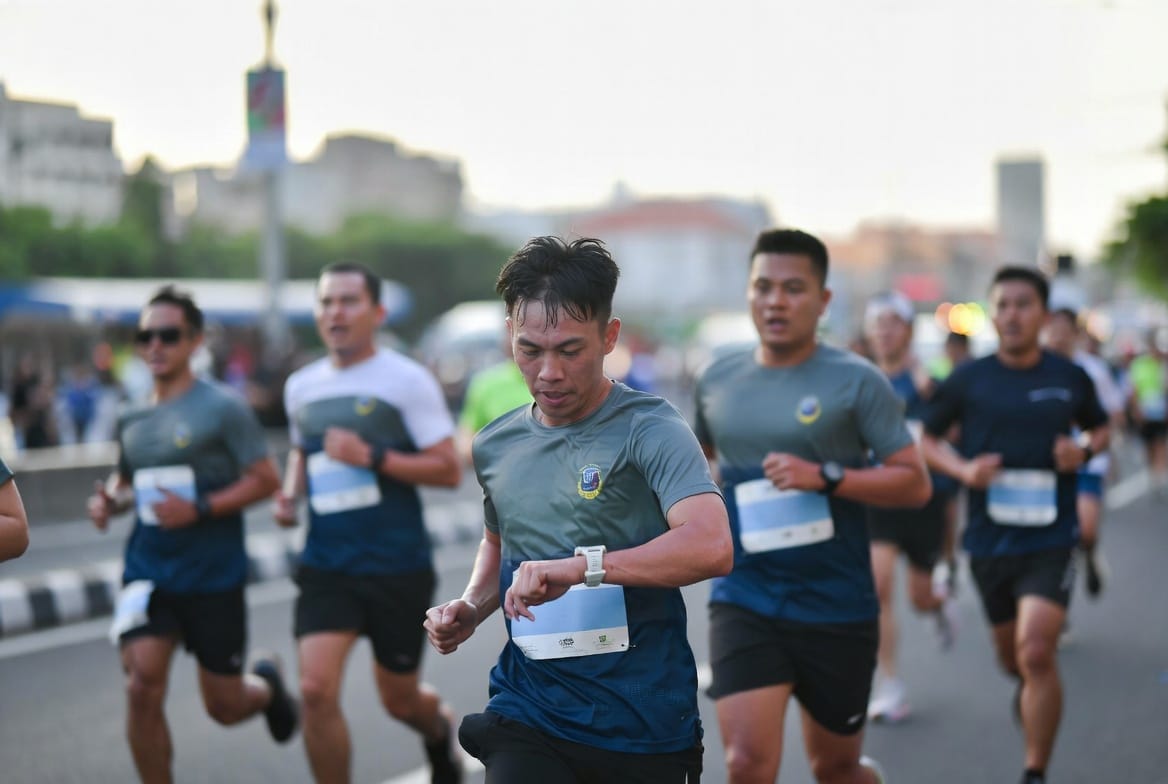
Almost every first-time racer makes the same mistake. The gun goes off, adrenaline takes over, the crowd surges forward — and you fly out way too fast. It feels amazing for about two kilometers. Then your legs turn to concrete, your breathing falls apart, and you spend the rest of the race walking and wondering what went wrong.
Pacing is the single most important skill for a good race, and almost nobody teaches it to beginners. This guide fixes that — how to pace your first 5K and 10K fun run so you finish strong instead of falling apart.
Why Pacing Matters More Than Fitness
Here's the counterintuitive part: two runners with identical fitness can have wildly different finish times based purely on pacing. The runner who starts controlled and finishes strong will beat the one who sprints the start and death-marches the end — every single time.
Good pacing means distributing your energy evenly across the whole distance. When you go out too fast, you burn through your limited fast-fuel (glycogen) early and flood your muscles with fatigue you can't recover from mid-race. Steady effort keeps you in control.
The Golden Rule: Start Slower Than You Think
If you remember one thing from this guide, make it this: the first kilometer should feel too easy.
On race morning your legs are fresh, adrenaline is pumping, and hundreds of runners are surging around you. A pace that feels "easy" at the start line is almost always too fast. Let the over-eager runners charge ahead. You'll pass a lot of them in the final third while they're walking.
A good mental cue: for the first kilometer, run at an effort where you're slightly annoyed at how much you're holding back. That's the right amount.
How to Pace a 5K
A 5K is short enough that you're working fairly hard the whole way, but long enough that pacing still decides your result.
- Kilometer 1 — hold back. Controlled, slightly-too-easy effort. Settle your breathing.
- Kilometers 2–3 — settle into a steady, "comfortably hard" pace you know you can hold.
- Kilometer 4 — this is the hard one. Hold your pace. Don't let it slip.
- Kilometer 5 — empty the tank. If you paced right, you have something left to push.
If you finish a 5K and think "I could have gone faster the whole way," you paced too conservatively. If you finish thinking "I nearly died at kilometer 4," you went out too hard. The sweet spot is finishing hard but not shattered.
How to Pace a 10K
The 10K punishes bad pacing more than the 5K, because there's twice as much distance for an early mistake to snowball.
- Kilometers 1–2 — deliberately easy. This is where most people ruin their race. Resist the surge.
- Kilometers 3–7 — lock into your steady goal pace. Relax your shoulders, breathe rhythmically.
- Kilometers 8–9 — the grind. Focus on form and holding pace when it starts to hurt. See our guide to building running endurance.
- Kilometer 10 — whatever you have left, give it. Finish strong.
For a first 10K, most beginners finish somewhere between 60 and 75 minutes. Don't fixate on a time goal for your first one — aim for an even effort and a strong finish. The time will come once you've learned to pace.
Understanding Splits — The Key Concept
Your "split" is how long each kilometer takes you. There are three ways a race can go:
- Positive split — second half slower than the first. Usually means you started too fast. The most common beginner outcome.
- Even split — steady pace throughout. A great goal for your first races.
- Negative split — second half faster than the first. The gold standard. You conserved early and finished strong.
Aim for an even split as a beginner, and a negative split as you get more experienced. Both start the same way: hold back early.
The Cebu Heat Factor
Pacing math changes in Philippine heat. Even at a 5 AM gun start, humidity climbs fast once the sun is up, and by the back half of a 10K you're running in real heat. Your heart rate climbs at the same pace, so a pace that felt easy at kilometer 2 feels much harder at kilometer 8.
Plan for it: pace the first half a touch more conservatively than you would in cool weather, and take water at every station even if you don't feel thirsty. A little caution early buys you a lot at the finish. Fuel matters too — see what to eat before a fun run.
How to Actually Hold Your Pace
Knowing your pace and holding it are two different things. The problem: you can't feel your exact pace, especially when adrenaline is lying to you. That's why a real-time pace cue is so valuable for beginners.
Run Buddy — our free GPS voice running companion — calls out your current pace as you run, so you catch yourself the moment you're drifting too fast (or too slow). It's the easiest way to learn what your goal pace actually feels like. It works right in your phone browser, no download, no cost. Use it on your training runs so that on race day, your goal pace feels automatic.
Put It Into Practice
Pacing is a skill you build by doing. Practice negative splits on your easy runs, learn what "comfortably hard" feels like, and trust the plan on race day even when the crowd is pulling you forward.
It matters more the further you go. At 5K and 10K, going out too fast costs you a slower finish. At 21K and 42K, the same mistake is the leading cause of hitting the wall — so the discipline you build now is what carries you through the long ones later. And if the start line makes your plan hard to stick to, that is completely normal race day nerves, not a character flaw.
Holding your planned pace when it starts to hurt is its own skill, separate from knowing what the pace should be. Our guide to staying mentally strong in the final kilometers covers what to do when the plan is right but your legs are arguing.
Ready to test it? Browse upcoming 5K and 10K fun runs in Cebu and the Philippines, pick one, and go pace it properly. Then log your finish time on RunMate so you can watch your pacing — and your times — improve race after race.
— Norman, founder of RunMate
Frequently Asked Questions About Pacing a Fun Run
How should a beginner pace a 5K?
Start slower than feels natural for the first kilometer, settle into a steady effort you can hold for the middle, and speed up only in the last kilometer if you have energy left. The most common beginner mistake is going out too fast and fading badly by the 3K mark.
What is a good pace for a first 10K in the Philippines?
For a first 10K, most beginners finish between 60 and 75 minutes, which is roughly a 6:00 to 7:30 per kilometer pace. Your goal for a first race isn't a fast time — it's an even effort where you finish strong rather than walking the last 2K. Pick a pace you can hold the whole way.
Why do I always go out too fast at the start of a race?
Race-day adrenaline, the crowd, and fresh legs make the starting pace feel easy — so you run faster than you can sustain. Everyone feels this. The fix is to deliberately hold back for the first kilometer, letting faster runners go, then run your own planned pace.
What is a negative split?
A negative split means running the second half of your race faster than the first half. It's the ideal pacing strategy — you conserve energy early and finish strong. The opposite, a positive split (slowing down), usually means you started too fast and paid for it later.
How do I hold a steady pace during a fun run?
Use a GPS pace app or voice companion that tells you your current pace so you can adjust in real time. Run Buddy calls out your pace as you run, free in your phone browser. Without a device, use effort and breathing as your guide, and resist speeding up when other runners pass you.