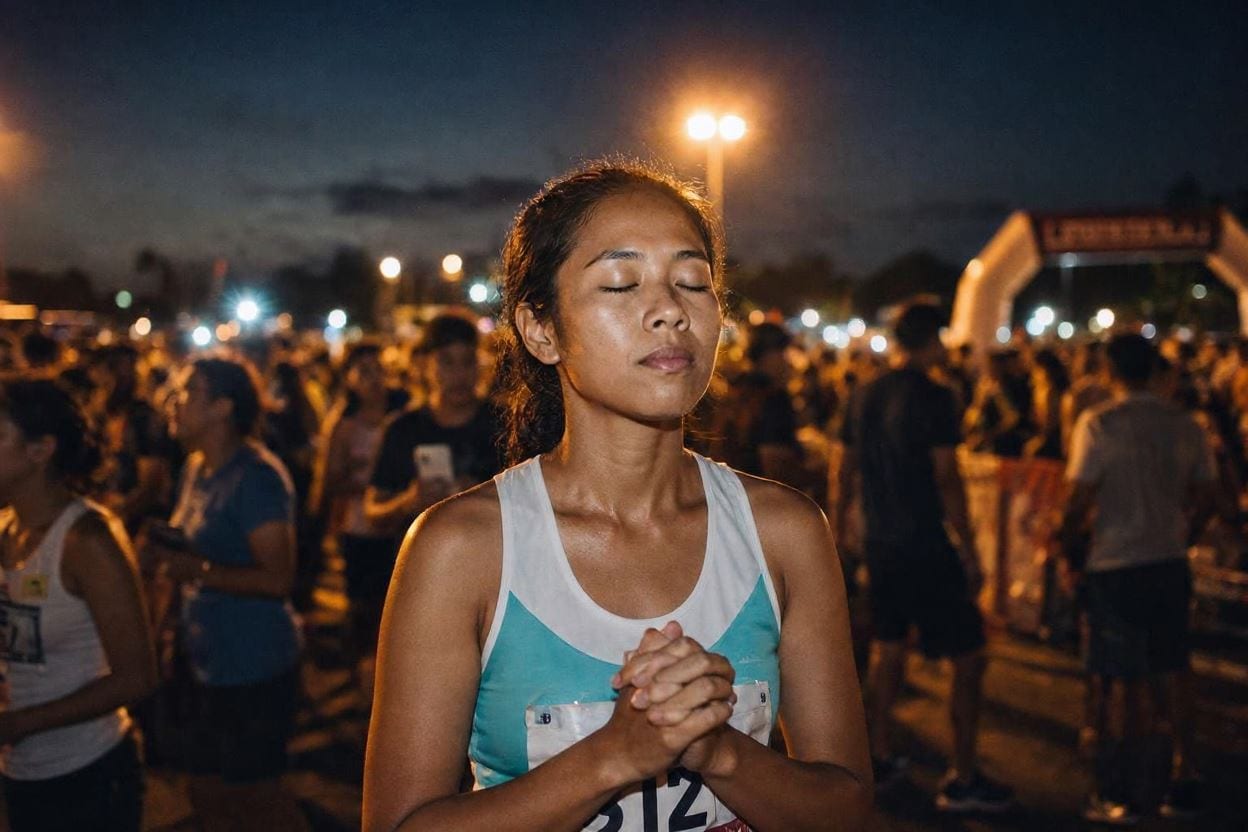
It is 4:15 AM. You are standing in the dark at the venue with a bib pinned to your shirt, surrounded by hundreds of people who all look like they know exactly what they are doing. Your heart is going faster than it should be for someone standing still. You have been to the toilet three times. You are seriously questioning why you signed up for this.
Every runner at that start line has felt this. The ones on their fiftieth race feel it too — they have just stopped treating it as a problem.
Are Race Day Nerves Normal?
Yes, and they never fully disappear. What changes with experience is your interpretation of them.
The physical symptoms are consistent: a fast heart rate, a churning stomach, cold or shaky hands, needing the toilet repeatedly, and a mind full of catastrophes. All of it comes from adrenaline, which your body releases to get you ready to work hard.
Here is the part worth internalising. The physical signature of anxiety and the physical signature of readiness are almost identical. Racing heart, sharpened focus, energy with nowhere to go — that is a body preparing to perform. The nerves are not evidence that something is wrong. They are the system booting up.
Where Do Race Nerves Actually Come From?
Three sources, and naming yours makes it much easier to handle.
- Fear of the unknown — first race, unfamiliar route, no idea what the morning looks like. This one fades quickly with experience.
- Fear of underperforming — you told people your goal time. Now there is a number to fall short of.
- Fear of being judged — finishing last, walking, being the slowest in your barkada. Almost always unfounded.
Beginners tend to carry the first and third. Experienced runners carry the second, which is why nerves often get worse as you get faster, not better.
Underneath most of it is a fear that the race will go badly. Worth knowing in advance that a bad race is survivable and genuinely useful — our guide to what to do when your race doesn't go to plan covers what to do when it happens, which takes a surprising amount of weight off the start line.
The Nerves Usually Start Before Race Morning
If you have been irritable, sleeping badly, and quietly convinced you are undertrained for the whole week, that is not race-day nerves — that is taper madness, and it is a normal side effect of cutting your training load before a race.
Knowing the difference helps. Taper anxiety is a week-long simmer that responds to logistics and planning. Race-morning nerves are a sharp spike in the final hour that responds to breathing and movement. Different problems, different fixes.
How to Calm Down Before a Race
You are not trying to eliminate the nerves. You are giving them somewhere useful to go.
Arrive earlier than feels necessary
Most race-morning panic is logistical, not athletic. Traffic, parking, a bag drop queue, a toilet line at 4:40 AM. Arrive 45 minutes early for a 5K and an hour or more for longer distances, and the whole morning stops being a scramble. Our fun run checklist for the Philippines covers what to sort the night before so race morning has nothing left to decide.
Warm up properly
The most underrated nerve treatment there is. Adrenaline is preparing your body for movement, so give it movement — ten minutes of brisk walking and easy jogging burns off the jittery excess and settles your breathing. It also means the first kilometer is not doing double duty as your warm-up. Our race-morning warm-up guide lays out the routine step by step.
Slow your exhale
Breathe in for four counts, out for six. A longer exhale than inhale nudges your nervous system out of fight-or-flight. Two minutes of this in the corral does more than any pep talk.
Have a plan for the first kilometer
This is the big one. Most pre-race anxiety is uncertainty wearing a costume, and a specific plan dissolves it. Decide your goal pace, decide you will let the fast starters go, decide where you will take water. Our guide to pacing your first 5K and 10K gives you a kilometer-by-kilometer script.
Practising that pace beforehand helps more than anything. Run Buddy calls out your pace as you run, free in your phone browser, so goal pace becomes a feeling you recognise rather than a number you hope for. Familiar is calm.
What About the Night Before?
You probably will not sleep well. Almost nobody does, and it matters far less than you think.
The night that actually affects your race is two nights before. Sleep properly on Friday for a Sunday race and one restless Saturday will not cost you anything measurable. Lying in the dark stressing about not sleeping is worse for you than the lost hours.
Lay everything out before you go to bed — bib pinned, shoes by the door, kit stacked. Then set two alarms and let the night be what it is.
The Nervous Stomach Problem
Adrenaline pulls blood away from your digestive system and speeds everything up, which is why the toilet queues at a Philippine fun run at 4:30 AM are what they are. It is universal and it is not a sign that something is wrong with you.
Manage it rather than fight it. Eat a light, familiar meal about two hours before the gun — rice, banana, pan de sal, whatever you have eaten before your training runs. Nothing new, nothing heavy, nothing high in fibre on race morning. Our guide to what to eat before a fun run in the Philippines covers the local options that sit well.
Then find the toilets the moment you arrive, and expect a queue.
"What If I Finish Last?"
The fear that stops the most first-timers from registering at all, so it deserves a direct answer.
In practice, someone finishing last is much rarer than beginners imagine. Philippine fun runs almost always have a sweeper vehicle, walkers, families, and people who stopped for photos — there is a whole crowd behind where you think the back of the field is.
And nobody is counting. Everyone who crosses that line gets the same medal, and no finisher photo records your placing. The people who did not register are not watching either. If you want proof of how varied real finish times are, browse the podium wall of Cebu race finishers and then look at how many runners logged times nowhere near it and were thrilled anyway.
Running With People Helps
Nerves shrink considerably when you are not standing alone in the dark. Arriving with a friend, or meeting a running group at the venue, turns the pre-race hour from an anxious wait into a normal morning with people.
If you do not have a crew yet, join a running group on RunMate and find people racing the same events. Cebu's running community is friendlier than the start line looks at 4 AM — most of those intimidating runners in compression socks are perfectly happy to tell you where the bag drop is.
Nerves for Different Kinds of Races
Not all race nerves are the same shape. A first 5K carries fear of the unknown. A goal-time 10K carries fear of falling short. A 21K or 42K adds the very specific worry of hitting the wall somewhere in the back half.
A first trail race is its own category — uneven ground, no pace markers, and effort that swings wildly with the terrain. If Busay or Osmeña Peak is on your list, our trail running tips for beginners in Cebu will make the unfamiliar parts a lot less unfamiliar.
The Nerves Are Proof It Matters
Here is the reframe that actually sticks. You do not get nervous about things you do not care about. Nobody's hands shake before a walk to the sari-sari store. The nerves are there because the finish line means something to you.
They also vanish faster than you expect. Somewhere in the first kilometer, once your legs are moving and your breathing settles, the whole thing quietly stops being a problem and becomes a run.
If it is your first one, our beginner's guide to running in Cebu covers the weeks leading up to it. Find something to aim at from the upcoming fun runs in Cebu and the Philippines, and when you cross the line, log it free on RunMate while the details are fresh. The second race is always easier — partly because you can look back and see you survived the first.
— Norman, founder of RunMate
Frequently Asked Questions About Race Day Nerves
Is it normal to be nervous before a fun run?
Completely normal, and it does not go away with experience — runners on their fiftieth race still feel it at the start line. Nerves are your body releasing adrenaline to prepare for effort. The physical signs of anxiety and the physical signs of readiness are nearly identical, which is why the feeling is so easy to misread.
How do I calm down before a race?
Give the nerves somewhere to go. Arrive early so nothing is rushed, warm up properly to burn off adrenaline, and slow your breathing by making the exhale longer than the inhale. Most usefully, have a specific plan for the first kilometer — uncertainty is what turns normal nerves into panic.
Why can't I sleep the night before a race?
Pre-race adrenaline and an unusually early alarm make broken sleep almost universal. It matters far less than runners fear, because the night that actually affects your race is two nights before. Sleep well on the Friday of a Sunday race and one restless night will not slow you down.
Why do I need the toilet so much before a race?
Adrenaline diverts blood away from your digestive system and speeds up gut movement, so nervous stomach and repeated toilet trips before the gun are standard. Eat a familiar light meal about two hours before, avoid anything new or high in fibre on race morning, and factor queue time into your arrival.
How can I stop being nervous about finishing last?
In Philippine fun runs there is nearly always a sweeper vehicle and a group of walkers behind you, so finishing last is rarer than beginners imagine. More to the point, nobody at the finish line is tracking who came in when. Everyone who crosses gets the same medal, and no photo shows your placing.